
 |
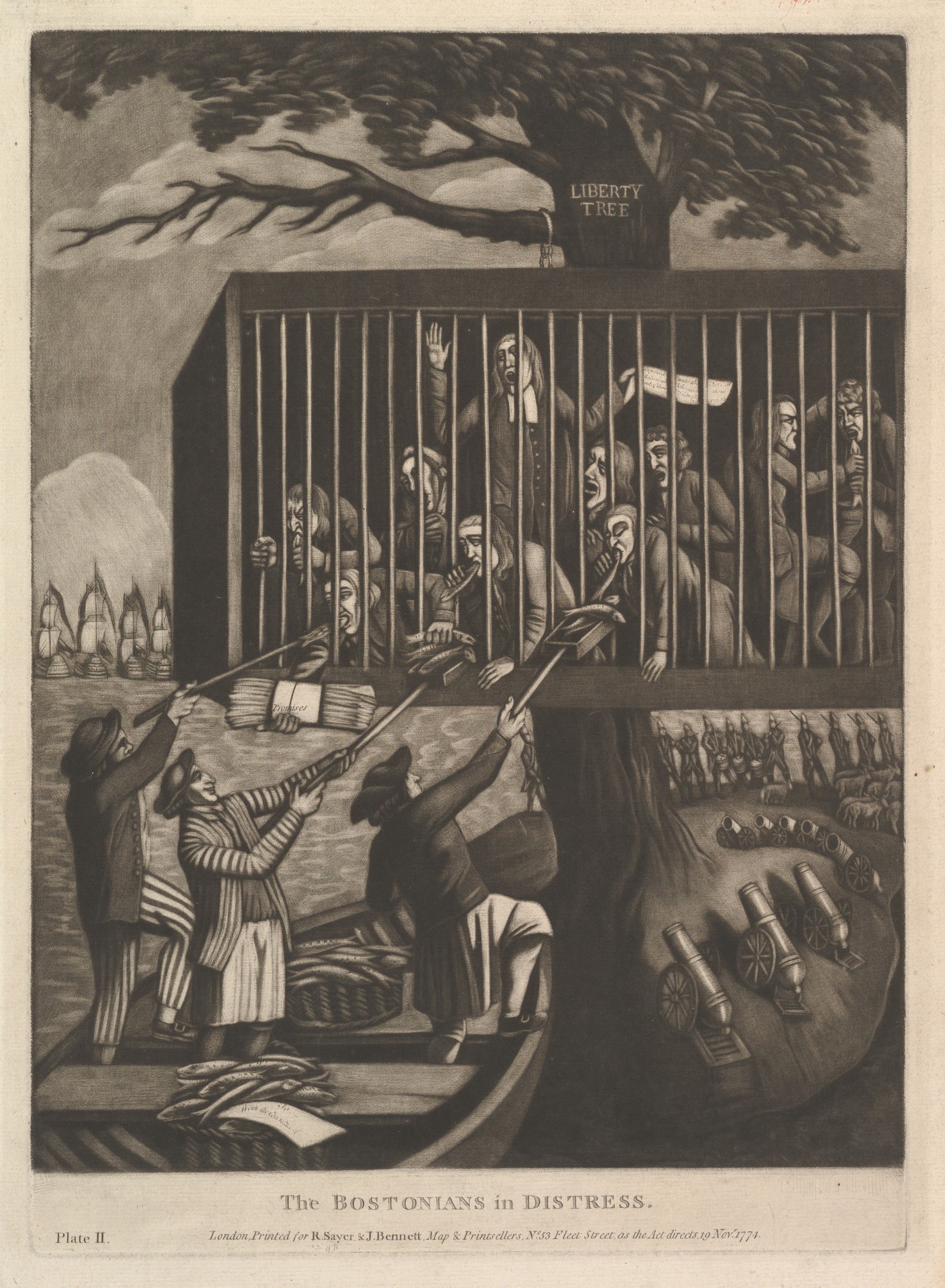
| Bostonians in Distress Source |
The Intolerable Acts of 1774 (aka The Coervcive Acts)
The Boston Port Act (March 31) was enacted directly and specifically to punish Boston and Massechusetts for the Boston Tea Party. The Port of Boston was closed and was to remain so until the damaged tea was paid for. The colonists refused. The port economy was shuttered from June 1, 1774 until early in 1776. This resulted in dire ecomonic consequences as much of the port city's commerce was tied to import and exports to Britain and other places.
The Massachusetts Government Act (May 20) stripped much of Massachusetts' self-government and put the control in the hand of the Royal Governor, Thomas Gage. Limits were imposed on town meeting. Local government officials were replaced and their replacements were appointed by the Royal Governor rather than elected by peers.
The Administration of Justice Act (May 20) gave British official accused of crimes in Massachusetts the option to have their trials moved outside the colony and have them tried in Britain instead. Yes, back home where their buddies were. Frustrated colonists referred to this one as "the Murder Act." The consensus was that the royal appointees could get away with murder now that there was less local accountability.
The Quartering Act (June 2) made provisions for a standing British army to be housed in the colonies thus allowing for ready enforcement should the colonists show the inclination to revolt again.
The Quebec Act (June 22) was not a punishment per se (and technically not one of the Coercive Acts), but the colonists reacted to it in the same way and saw it as just as intrusive to their liberties as the others. Britain's efforts to reorganize Quebec’s government, protect Catholic worship, and secure control of the region did not sit well. The colonists saw this move as Catholic favoritism, more overreach of royal power, and another attempt to block settlement into the less populated and more fertile lands to the west.
Reactions
Provincial NC fit this pattern of thinking perfectly. Her reaction was less about one single dramatic event and more about a rapid move toward unity, boycott, and extra-legal colonial government in response to the sense that Parliament could punish any colony the way it punished Massachusetts.
Explore More:
The Intolerable Acts: When British Punishment Pushed America Toward RevolutionThe Colonial Responses to the Intolerable Acts
The Intolerable Acts | How Did the British React to the Boston Tea Party?
In the common cause: American response to the Coercive acts of 1774 by Ammerman, David. University Press of Virginia. 1974. Access through Internet Archive. Link
A Comprehensive timeline from 1763- 1775 from the George Washington Library at Mount Vernon.
Visit Wake County Genealogical Society's Website - Homepage | WCGS Events | Join WCGS | Wake Genealogy Watch Newsletter | WCGS Facebook | Wake Cemetery Survey Images | Resources | Contact - info(at)wakecogen(dot)org
Comments
Post a Comment