
 |
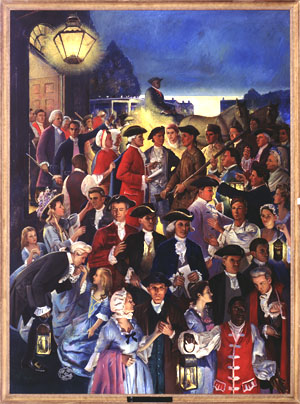
| "Halifax Resolves mural" by Francis Vandeveer Kughler. Source |
In North Carolina, these clandestine meetings led to two very important documents written in the year leading up to the Revolution. The documents are the Mecklenburg Resolves made May 31, 1775, and the Halifax Resolves made April 12, 1776. Read together, they reveal how North Carolinians moved from local resistance to a colony wide commitment to break from Britain.
The Mecklenburg Resolves emerged from a tense moment in Mecklenburg County only weeks after the first shots were fired at Lexington and Concord. Local leaders declared that British laws were no longer valid in the colonies and that governing authority should instead rest in local and provincial bodies chosen by the people. In practice, this meant that, at least in Mecklenburg, residents were prepared to act as if they were no longer governed by Parliament at all. The document did not spell out “independence” in the modern sense, but it amounted to a radical restructuring of political authority on the ground.
The Mecklenburg Resolves:
• Rejected royal and parliamentary authority.
• Shifted power to local colonial leadership.
• Ordered militia readiness and weapons supplies.
• Established county-level measures for order and defense.
Read a transcription of the Mecklenburg Resolves
Less than a year later, the Halifax Resolves transformed that local spirit into an official colony wide stance. Meeting in April 1776, the Fourth Provincial Congress in Halifax authorized North Carolina’s delegates at the Continental Congress to vote for independence and to join in forming foreign alliances. This was the first formal instruction from any colony explicitly empowering its representatives to support independence for all the American colonies. Where Mecklenburg declared a break at the county level, Halifax announced a commitment by the whole colony to seek complete political separation.
The Halifax Resolves:
Empowered North Carolina's delegates to the Continental Congress to vote for independence from Great Britain
• Authorized forming foreign alliances with other nations.
• Reserved North Carolina's exclusive right to form its own constitution and laws.
• Allowed North Carolina to appoint its own delegates to meet with other colonies for future purposes.
Read a partial transcription of the Halifax Resolves
The fact that these two documents “bookend” the final year of North Carolina’s colonial existence illustrates the change in thought as the idea of independent freedom took hold. At one end, Mecklenburg shows ordinary North Carolinians experimenting with self government and rejecting imperial authority in their own communities. At the other, Halifax shows their representatives integrating that radicalism into a broader, coordinated American project—one that included diplomacy, constitutional design, and national independence. In between lay resolves and debates from other counties, Mecklenburg and Halifax captured the shift from rebellion within an empire to participation in founding a new nation.
Visit Wake County Genealogical Society's Website - Homepage | WCGS Events | Join WCGS | Wake Genealogy Watch Newsletter | WCGS Facebook | Wake Cemetery Survey Images | Resources | Contact - info(at)wakecogen(dot)org
Comments
Post a Comment